
By Cecilia Nasmith
United Way Northumberland and the Northumberland Labour Council this week shared the news that the legal minimum wage falls far short of the bare minimum needed.
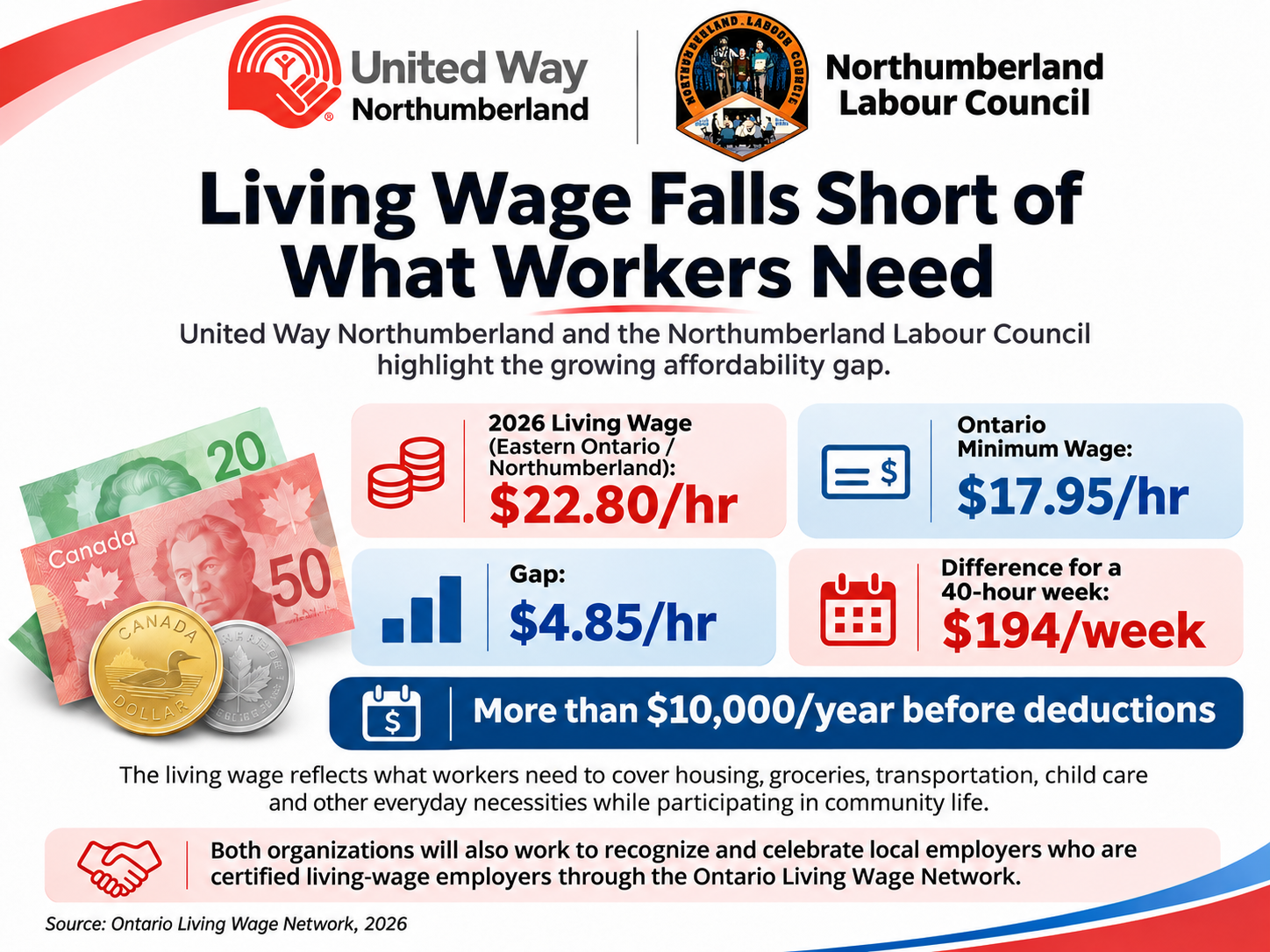
This week's announcement shared statistics provided earlier this month by the Ontario Living Wage Network, calculating that a 2026 living wage for Eastern Ontario (including Northumberland County) would be $22.80 per hour – up from $22.20 last year. The new figure “reflects the on-going affordability pressures facing households as they work to cover housing, groceries, transportation, child care and other every-day necessities.”
Meanwhile, the latest hike to Ontario's general minimum wage puts that figure at $17.95 per hour as of Oct. 1.
This is $4.85 per hour below the living wage. For someone working 40 hours a week, this represents a difference of $194 per week or more than $10,000 annually before deductions.
Calculated annually by the Ontario Living Wage Network, the living wage considers the expenses of three household types – a single adult, a single parent, and a family made up of two working adults and two children – and accounts for essential expenses, applicable government benefits and taxes, and “modest participation in community life.”
As opposed to what the press release termed a luxury wage, “it is intended to provide individuals and families with sufficient income to meet their basic needs and participate meaningfully in their communities.”
“When someone works 40 hours a week, shows up every day, pays their taxes and contributes to their community, they should be able to afford rent, groceries, transportation and the basic necessities of life,” Northumberland Labour Council Dan Tobin said.
At United Way Northumberland, Executive Director Alician Vandine said, they see members of the community experiencing the painful debate whether to pay rent, purchase groceries or meet other essential needs.
“Employment should provide individuals and families with a reasonable opportunity to meet their basic needs and participate in their community,” Vandine stated.
“When people are working full-time and still struggling to afford housing, food and other necessities, we need to recognize that affordability is not simply an individual challenge, it is a community issue. A living wage is one important part of creating greater financial stability, reducing poverty and building a healthier, more resilient Northumberland County.”
When workers have greater financial stability, Tobin added, they have more opportunity to support local businesses, participate in community activities and contribute to the economic well-being of the region.
United Way Northumberland and the Northumberland Labour Council recognize that businesses and non-profit organizations face their own challenges, with rising costs and economic uncertainty – which is why both organizations will work together over the next several months to recognize and celebrate local employers who have become certified living-wage employers through the Ontario Living Wage Network.
“We also recognize that some local employers may already by paying a living wage without having pursued formal certification,” Vandine stated.
“We want to acknowledge those efforts and encourage employers to explore the benefits of becoming certified. This initiative is about celebrating positive leadership within our business community and encouraging others to consider how they can contribute to a stronger Northumberland.”
Employers who already pay at or above the regional living wage of $22.80 per hour but are not yet certified are encouraged to learn more about the Ontario Living Wage Network's certification process and requirements. Certification demonstrates a commitment to fair wages and join a growing network of employees who recognize the importance of financial stability for their employees.